Choosing an IaC control plane for a SaaS product gets expensive when the workflow breaks, not when the first plan succeeds. The hard part is controlling promotion, approvals, drift, secrets, and access once more people touch the same environments.
If you’re comparing Terraform Cloud, Spacelift, and Pulumi in 2026, compare them as operating models. That makes the tradeoffs easier to see.
Start with a fair comparison
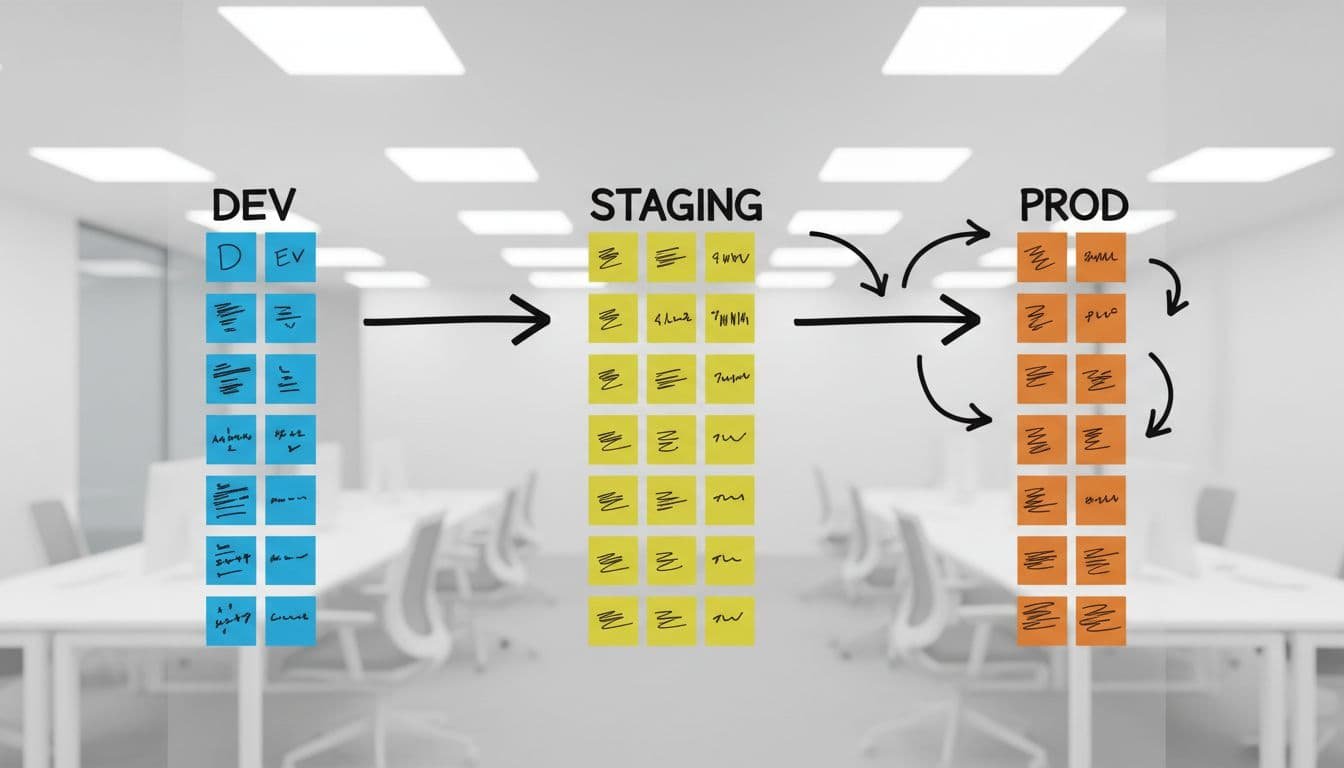
A fair test uses the same sample service, the same cloud accounts, and the same path from dev to staging to prod. If one product gets a simple Terraform repo and another gets a custom code framework, the result is noise.
Keep your scorecard narrow:
- Use one representative SaaS stack, such as VPC, database, app service, DNS, and secrets.
- Apply the same approval rule before production.
- Use the same policy checks, drift rule, and audit requirement.
- Pull secrets from the same source, whether that’s a cloud KMS or an external vault.
Also write down who can approve production, who can read secrets, and who owns drift cleanup. Those roles often matter more than a long feature list.
Pricing changes the answer too. As of April 2026, Terraform Cloud’s enhanced free tier covers up to 500 managed resources and one concurrent run. That’s enough for a small stack, but many SaaS teams hit that ceiling quickly. Resource-based billing can also be hard to forecast, as this Terraform Cloud pricing breakdown shows. Spacelift and Pulumi plan details move too, so verify current limits before you commit.
The criteria that matter in daily operations
For SaaS teams, the best choice is usually the tool that makes routine change safer. Start with environment promotion. Can you move changes from dev to staging to prod with the same policy gates every time? Then look at approvals. You want human review where it matters, without turning every plan into a ticket queue.
Policy enforcement and drift detection matter next. Policy checks stop risky plans before they run. Drift detection tells you when someone changed cloud resources outside IaC. Audit trails close the loop, because you need to know who approved, who applied, and what changed.

Secret handling and access boundaries often decide the winner. A SaaS team may want app engineers to update dev and staging, while only a small group can touch production. You should also check how easy it is to offer self-service access without exposing shared networking, billing, or production secrets.
Pick the tool that matches your operating model, not the one with the longest feature page.
How Terraform Cloud, Spacelift, and Pulumi differ in practice
This quick view is enough for most shortlists, but remember that Pulumi changes the authoring model more than the other two.
| Criteria | Terraform Cloud | Spacelift | Pulumi |
|---|---|---|---|
| Authoring model | Terraform only | Multi-IaC runner | Code-first IaC |
| Promotion flow | Workspaces and runs | Stack dependencies | Stacks and code pipelines |
| Policy | Sentinel, OPA, run tasks | OPA across workflows | Policy packs, code checks |
| Drift | Built in | Built in, optional remediation | Depends on Pulumi workflow |
| Secrets | Dynamic creds, vault support | Secure vars, vault support | Encrypted secrets, KMS |
| Best fit | Terraform-heavy teams | Multi-team orchestration | App engineers writing infra |
Terraform Cloud is the cleanest fit when your SaaS setup is still mostly Terraform. It gives you remote state, shared runs, policy gates, audit history, and drift detection in one place. As of April 2026, it also supports short-lived provider credentials, which reduces the need for long-lived cloud keys. The tradeoff is scope. If you need one control plane for Terraform, Pulumi, and other IaC, Terraform Cloud won’t cover that.
Spacelift fits teams that have outgrown a single-tool workflow. It supports Terraform, Pulumi, and other IaC types in one control layer, which helps when platform teams manage shared services and app teams ship changes on top. Stack dependencies, policy checks, and drift controls are strong points. However, the platform has more moving parts, so a tiny team may feel the extra setup. This SaaS IaC comparison makes a similar distinction.
Pulumi is different because it changes how you write infrastructure, not only where you run it. Teams use real languages such as TypeScript, Python, Go, C#, or Java, as shown in Pulumi’s platform overview. Pulumi Cloud adds state, RBAC, and review features for teams that want that code-first model. The tradeoff is migration cost. If your estate is already Terraform-heavy, moving to Pulumi means changing the authoring model and often team habits with it.
Which tool fits common SaaS setups
Tool choice usually maps to team shape more than company size. A six-person SaaS can need tighter approvals than a 40-person company if production risk is high. For example, a shared platform repo with separate service teams often needs stack-to-stack coordination that simple workspace models don’t handle well.
- Terraform Cloud fits best when Terraform already runs most of your stack, and you want safer plans, clearer audit trails, and straightforward promotion across dev, staging, and prod.
- Spacelift fits best when you need shared guardrails across teams, stronger access boundaries, and one place to manage Terraform-heavy plus Pulumi or other IaC workflows.
- Pulumi fits best when product engineers already think in code, want abstractions and tests, and accept that infrastructure will look more like software development.
Migration cost should stay on the scorecard. Moving from Terraform Cloud to Spacelift often changes the workflow layer more than the IaC itself. Moving from Terraform to Pulumi usually means refactoring code, retraining reviewers, and rewriting policy and CI habits.
Common mistakes that waste time
A frequent mistake is treating Pulumi as a direct replacement for Terraform Cloud. Pulumi also changes how infrastructure is authored, reviewed, and reused.
Teams also underestimate governance. Approval workflows, policy as code, drift detection, audit trails, and secret handling feel small on day one. They become daily work once customers, compliance needs, and multiple teams show up.
One more miss is trusting the demo too much. Run a real change, then test rollback, failed policy checks, and manual cloud drift.
Conclusion
The best answer in the Terraform Cloud, Spacelift, and Pulumi debate depends on your operating model. Terraform Cloud is strong for Terraform-first teams. Spacelift is strong when governance spans many teams and tools. Pulumi is strong when you want infrastructure to live in real programming languages.
Take one representative service and run a short proof in dev, staging, and prod. Use the same approvers, the same secret source, and one drift rule. The right choice gets boring quickly, because your team spends less time fighting the workflow.
