Most Apple MDM comparisons stop at feature lists. That falls apart when you need devices to join, patch, comply, and leave your SaaS stack with little hand work.
If you’re weighing Kandji vs Jamf Pro, Mosyle belongs in the same decision because it changes both cost and admin effort. For a SaaS-first team in 2026, the best pick is the one that removes steps from onboarding and offboarding, not the one with the longest settings menu.
What matters in a SaaS device workflow
In a SaaS-centric setup, device management starts with identity. A new hire signs in with Okta or Entra ID, the Mac enrolls through Apple Business Manager, role-based apps land automatically, and security rules apply before the user opens Slack or Gmail. After that, patching, compliance evidence, and SaaS offboarding need to stay tied to the same workflow.

That is why plain Apple MDM coverage isn’t enough. You also need clean identity provider integration, reliable zero-touch deployment, app provisioning that doesn’t depend on manual package work, and device compliance automation that creates evidence your team can export later.
Pick the tool that removes steps from joiners and leavers, not the one with the most options.
All three platforms cover Apple management well. The gaps show up in how much setup they need, how flexible their logic is, and how much labor they save after rollout. Jamf Pro usually gives the deepest control. Kandji usually lands in the middle, with Apple-focused automation and less design work. Mosyle usually asks for the least admin effort, especially for smaller teams.
Kandji vs Jamf Pro vs Mosyle, side by side
The table below keeps the comparison focused on day-to-day execution.
| Platform | Best fit | Identity and enrollment | Apps and patching | Admin effort | Pricing signal |
|---|---|---|---|---|---|
| Kandji | Lean Apple IT teams | IdP-backed enrollment auth, ADE support | Strong app and patch automation | Medium | Public pricing is harder to confirm |
| Jamf Pro | Larger fleets, custom logic | Mature SSO and login workflows, ADE | Large app catalog, deep scripting | High | Public sources place Macs above $10 per device/month |
| Mosyle | Small teams, low-touch ops | Mosyle Auth with Okta, Entra ID, Google | App catalog, auto permissions, patching | Low | Public sources show low entry pricing, around $1 per device/month |
As of April 2026, public pricing signals still vary by source, so verify current packaging before you budget. You can compare public references through Jamf Pro Standard pricing, Mosyle pricing details, and a broader Apple management guide for 2026.
For identity-heavy deployments, first-boot design matters more than marketing pages. Kandji’s enrollment authentication settings are a good example of how tightly your IdP setup can shape rollout.
In practice, Jamf Pro fits teams that want custom scoping, extension attributes, and scripted control. Kandji fits teams that want strong Apple automation without taking on the full weight of Jamf. Mosyle fits teams that want onboarding, patching, and compliance to stay simple.
A practical framework for choosing
Use this order when you evaluate platforms, because it mirrors real rollout work.
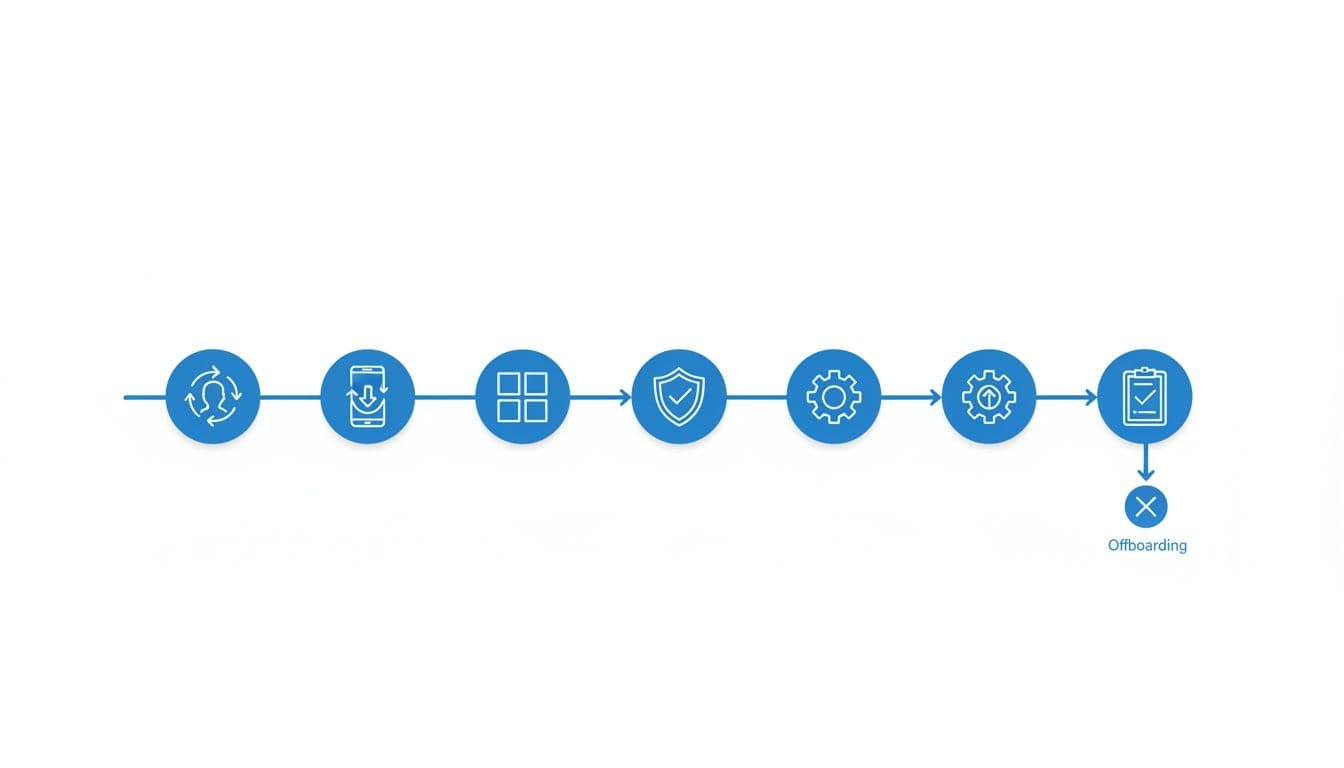
- Map your joiner flow first. If the device must verify identity and install role apps on first boot, rank enrollment and IdP options above all else.
- Count policy exceptions next. If many teams need special rules, Jamf Pro’s extra control may save rework later.
- Measure patching labor. If you can’t babysit packages and approvals, Mosyle or Kandji usually reduce upkeep.
- Define offboarding in minutes, not days. Test lock, wipe, and access removal in the same flow.
- Price admin time along with licenses. Cheap software gets expensive when it needs constant care.
That framework usually leads to a clear answer. If your team runs an Apple-only fleet and wants low-touch management, Mosyle often comes out ahead. If custom workflows matter more than speed, Jamf Pro earns its overhead. If you want a middle ground, Kandji is often the more balanced pick.
This also helps if you’re reading broader endpoint management comparisons. A tool can look similar on paper, then feel completely different when a new hire starts on Monday morning.
Common rollout mistakes, and when each platform is the wrong choice
Migration mistakes that slow teams down
A lot of rollout pain comes from sequence, not product limits.
- Teams migrate devices before cleaning up IdP groups, app ownership, and Apple Business Manager assignments.
- They test zero-touch deployment on one machine, then miss reseller or ADE assignment gaps at scale.
- They treat compliance as a dashboard view, not exportable evidence for audits or customer reviews.
- They leave SaaS offboarding outside the device workflow, so the laptop wipes late and app access lingers.
The biggest mistake is buying for feature depth, then staffing for simplicity.
Run a pilot that covers the full lifecycle. Include one new hire, one lost device, one patch cycle, and one termination. If the workflow breaks there, it will break faster in production.
When Kandji, Jamf Pro, or Mosyle is the wrong fit
Kandji is the wrong choice if you need the deepest custom logic or broad non-Apple coverage. It can also be hard to judge budget fit when public pricing is limited.
Jamf Pro is the wrong choice if nobody on your team wants to own an MDM platform day to day. Its control is useful, but it asks for more design, testing, and upkeep.
Mosyle is the wrong choice if you expect Jamf-level flexibility for edge cases or heavy in-house policy modeling. It’s strongest when simplicity is the goal.
If you judge these tools by brochure features, the answer stays fuzzy. Judge them by joiner time, patch effort, compliance evidence, and admin effort, and the choice gets a lot clearer.
For most small Apple-first teams in 2026, that last point is the tiebreaker. Jamf Pro fits teams that want more control, Kandji fits teams that want balance, and Mosyle fits teams that want low-touch management at a lower cost.
