Choosing between these three tools starts with operating model. A founder-led team hiring six people this quarter needs a different system than a SaaS company running scorecards, approvals, and recruiter ops across five departments.
In other words, the ashby vs greenhouse vs lever decision is about workflow fit. Start with the work your team repeats every week, then compare vendors.
Decide based on your hiring system first
If your team handles a few hires each quarter, speed and manager adoption matter most. If you run many roles across functions, process control, audit trails, and reporting matter more.
Before demos, document your hiring stages, approval flow, interviewer training, must-have reports, and migration scope. Include open jobs, scorecards, notes, email and calendar history, and source data. That prep stops the usual mistake of buying for demo polish.
Buy for the workflow your team will run every week, not the demo you saw once.
This is also the right moment to line up internal docs on ATS implementation, interview process design, hiring scorecards, and recruiting metrics. Those documents expose whether you need structure, CRM depth, or built-in analytics.
Ashby vs Greenhouse vs Lever, where each tends to fit
This quick view is more useful than a long feature dump.
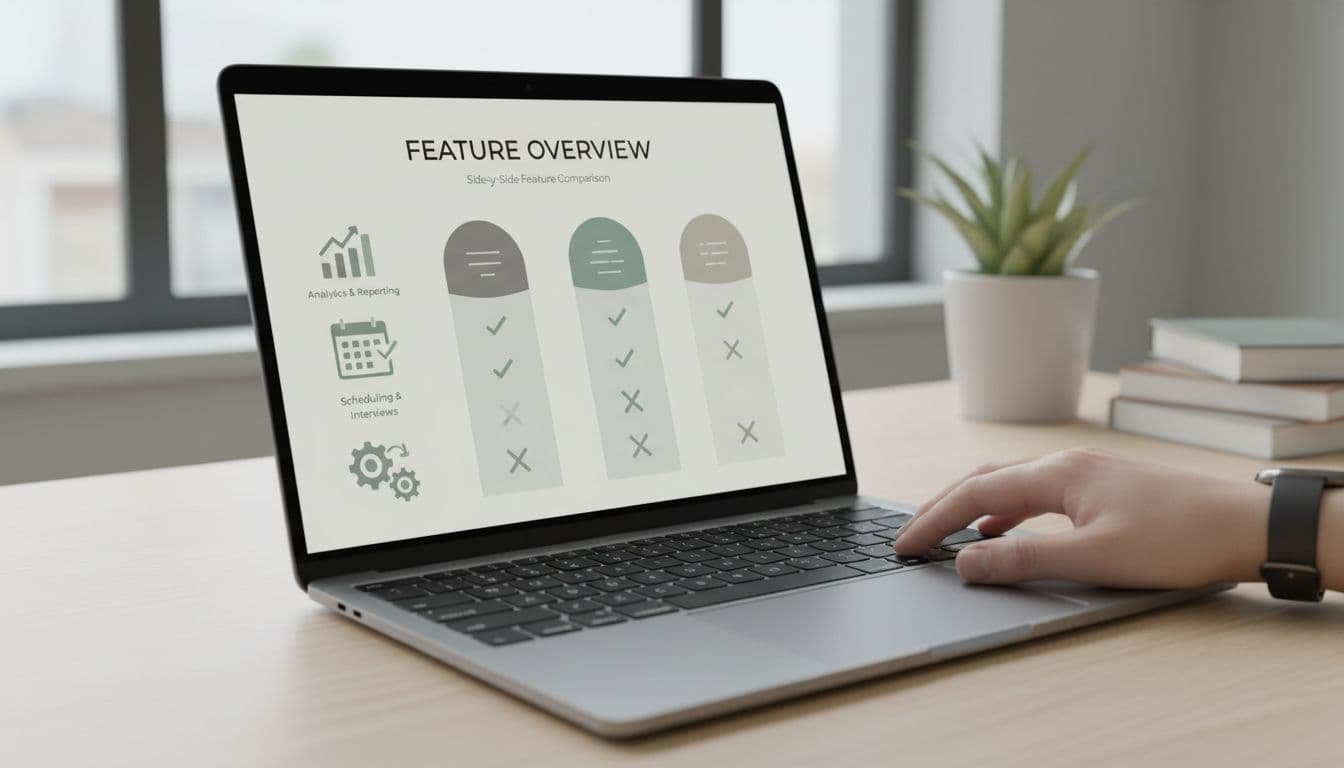
| Platform | Best fit by stage | Strongest day-to-day fit | Likely friction |
|---|---|---|---|
| Ashby | Startup to upper mid-market SaaS | Recruiter ops, analytics, automation, built-in scheduling | More depth than light hiring teams need, and cost rises with scale |
| Greenhouse | Mid-market to enterprise | Structured interviews, approvals, compliance, wide integrations | Heavier setup and more admin work |
| Lever | Small to mid-market | CRM-style sourcing, candidate nurture, fast manager adoption | Reporting and complex workflows can feel tighter later |
Ashby often fits SaaS teams that want ATS, CRM, scheduling, and analytics in one product. Greenhouse usually fits companies that already run a formal hiring process and need strong controls across many interviewers. Lever is attractive when sourcing and candidate follow-up are central to the recruiting model.
Pricing and packaging change, so verify live details. Ashby is one of the few vendors with a public starting point on its pricing page. For outside context before the shortlist meeting, a buyer-side comparison of Ashby and Greenhouse is a useful check, but it should not replace a hands-on trial.
Where recruiter and hiring manager workflows start to diverge
Recruiters live in bulk actions, scheduling, follow-ups, and reports. Hiring managers live in interview prep, feedback forms, and approvals. When those views clash, adoption drops.

Recruiter speed, manager adoption, and scheduling
Ashby keeps more of the recruiter workflow in one place. That reduces tool switching and helps lean teams without a dedicated recruiting ops lead. Greenhouse gives hiring managers clear scorecards and approvals, but admins usually do more design work up front. Lever is simple to learn, which helps busy managers, though role-specific workflow variation can hit limits sooner.
Scheduling shows the same pattern. Ashby is strong for teams that want built-in coordination. Greenhouse is reliable for formal interview loops, but setup discipline matters. Lever works well for standard loops, so teams with complex panel rules should test those paths in a sandbox.
Reporting, automation, CRM, and integrations
Ashby has the deepest built-in analytics of the three based on 2026 product updates and buyer feedback, including newer formula fields and AI report summaries. Greenhouse can report well at scale, but some teams spend more time configuring workflows or pairing it with other tools. Lever reports are easier to read than to customize.
Lever still has a real advantage for CRM-style recruiting. If your recruiters spend much of the week sourcing and nurturing prospects, that matters. Greenhouse has the broadest integration ecosystem. If your stack already includes Slack, Google Workspace, Microsoft 365, assessments, and background checks, that breadth can reduce edge-case work. Ashby’s smaller catalog matters less when you want more capability built in.
Implementation follows the same logic. Greenhouse usually asks for the most design work. Ashby can replace more point tools. Lever is often faster to start. Before you sign, test stage mapping, historical reporting, email sync, open req imports, and permission models.
Run a structured evaluation before procurement
Most ATS mistakes happen before the contract. Teams compare feature lists without agreeing on the hiring model they want to run.
Use one live req and the same sample candidates across all three tools. Then score each platform on the work your team does every week.
- Map the current process on one page.
- Mark non-negotiables, usually reporting, scheduling, CRM, approvals, integrations, and migration.
- Run a sandbox with recruiter, hiring manager, and admin tasks.
- Build the monthly funnel report leadership expects.
- Price total operating cost, including seats, add-ons, services, and tools you still need.
Decision rules help here. Choose Ashby if recruiter control and built-in analytics matter most. Choose Greenhouse if governance, structured interviews, and ecosystem breadth matter most. Choose Lever if CRM-style recruiting and fast adoption matter more than advanced reporting.
Before procurement, finish one more checklist: migration owner, training owner, 90-day success metrics, and rollback plan. It also helps to sanity-check your shortlist against third-party review roundups like VendorPick’s ATS rankings, while remembering that review sites can’t test your workflow for you.
The ashby vs greenhouse vs lever choice gets much easier once you stop comparing slogans and start comparing weekly work. Pick the platform that fits your process now and still holds up when hiring volume doubles. A live sandbox and a migration checklist will tell you more than any polished demo.
