If you sell SaaS to other businesses, attribution gets messy fast. A buyer may click an ad, read two emails, visit from LinkedIn, and book a demo weeks later. The best saas attribution tools help you connect those touches to pipeline and revenue.
In 2026, Dreamdata, HockeyStack, and Factors.ai solve that problem from different angles. Dreamdata goes deepest on B2B revenue attribution. HockeyStack favors speed, real-time reporting, and flexibility. Factors.ai leans harder into account identification and intent. That difference matters more than any feature list.
Why this comparison is harder than it looks
These tools overlap, but they aren’t perfect substitutes. Dreamdata and HockeyStack compete more directly. Factors.ai often sits closer to account intelligence, then overlaps with attribution where journeys, scoring, and campaign signals meet.
So the real question isn’t just, “Which one has more features?” It’s which workflow you need to support. Some teams need finance-friendly multi-touch reporting. Others need fast answers for paid spend, CRM touches, and outbound. Smaller teams may just need better account visibility without building a warehouse first.
A simple mental model helps. Dreamdata is the careful bookkeeper. HockeyStack is the live control room. Factors.ai is the account radar. None wins by default. Fit depends on your sales cycle, data quality, and who will own the tool after launch.
What needs to be true before you compare them
Before you compare anything, get the basics in place. You need clean UTM rules, stable lifecycle stages, CRM ownership, and access to ad accounts. If those pieces are shaky, every dashboard will look smarter than the data behind it.
Next, decide how you’ll judge success. Most teams compare these tools across six buying points: CRM fit, warehouse fit, multi-touch depth, account-based reporting, ad coverage, and setup effort. If your team is still sorting out first-touch, last-touch, or multi-touch logic, Dreamdata’s attribution model documentation is a useful refresher.
This quick table frames the buying lens:
| Tool | Best fit | Warehouse fit | Attribution depth | Setup effort | Team fit |
|---|---|---|---|---|---|
| Dreamdata | Complex B2B SaaS | Strong with BigQuery | Deep multi-touch, account-level | Medium to high | Mid-market, RevOps-heavy |
| HockeyStack | Fast-moving B2B teams | No warehouse needed | Deep, real-time, flexible | Low to medium | Startup to mid-market |
| Factors.ai | ABM and intent-led teams | Usually no warehouse needed | Moderate, account-first | Low to medium | Small to mid-size GTM |
Use the table as a fit map, not a quote sheet. Packaging and feature limits can change by plan. Also, if you’re building a broader reporting stack, related guides on multi-touch attribution, marketing attribution models, revenue operations analytics, and CDP vs attribution tools can help narrow scope before demos.
How Dreamdata, HockeyStack, and Factors.ai differ in practice
Once the basics are in place, the differences show up in day-to-day work.
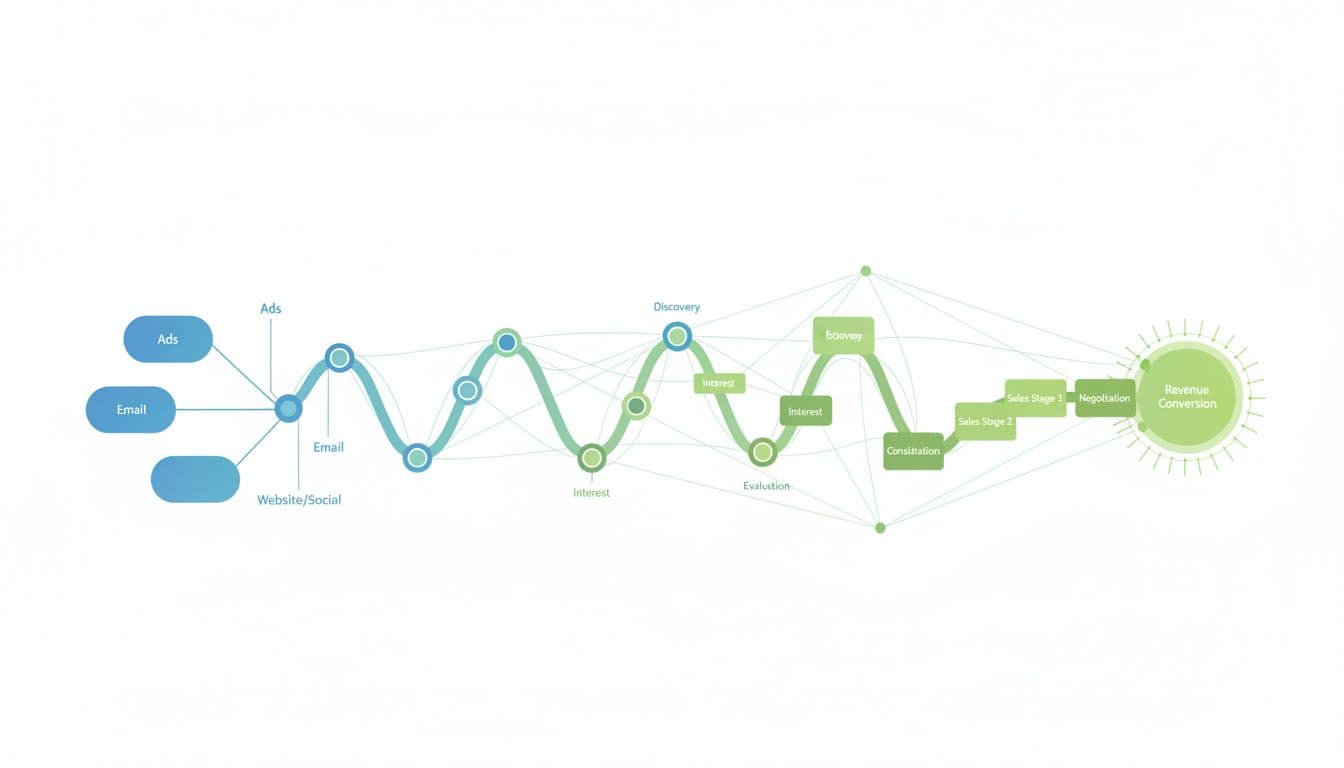
Dreamdata
Dreamdata makes the most sense when attribution is a core reporting system, not a side project. It fits B2B SaaS teams with longer sales cycles, broad ad coverage, and a warehouse-friendly setup. Its strength is deep buyer journey visibility, strong account-based reporting, and revenue mapping across many touches.
That makes it a strong option for mature RevOps teams and board-level reporting. However, setup usually takes more effort, and the payoff depends on cleaner CRM data. Public starting pricing seen in March 2026 is around $599 per month, but that can change by plan and usage. For product context, see Dreamdata.
HockeyStack
HockeyStack is the easiest answer for many startups and lean B2B teams. It doesn’t require your own warehouse, and its Atlas backend plus no-code reporting reduce setup friction. It also offers real-time attribution, funnels, cookieless tracking, and strong account journey views.
So if you want one place for attribution, pipeline reporting, and faster ad feedback, HockeyStack often feels lighter to run. The tradeoff is that its native integration breadth may be narrower than Dreamdata’s, and some teams report a bit of tuning during rollout. Public entry pricing appears around $1,399 per month in 2026, although packaging may shift. Learn more at HockeyStack.
Factors.ai
Factors.ai fits best when your main gap is account identification and intent, not only campaign credit. It pulls signals from places like website visits, LinkedIn, and G2, then helps score and route accounts. That makes it appealing for smaller ABM teams that want action, not just reporting.
Still, it’s usually weaker as a full multi-touch revenue system than Dreamdata, and less broad as an all-in-one GTM analytics layer than HockeyStack. If your workflow starts with “which accounts are heating up?” it deserves a close look. The clearest product summary is on the Factors.ai attribution page.
For complex B2B SaaS, Dreamdata is often strongest. For teams without a warehouse, HockeyStack usually fits better. For account-based intent work, Factors.ai has the clearest edge.
Implementation realities and common disqualifiers
Implementation is where great demos meet real life. Attribution tools rarely fail because the charts look bad. They fail because fields don’t match, Salesforce stages drift, or paid teams use messy naming rules.

Dreamdata usually needs the most operational discipline. HockeyStack often reaches first useful dashboards faster, sometimes within a few weeks. Factors.ai is lighter when the goal is account ID, audience syncs, or journey snapshots rather than finance-grade attribution.
The best attribution tool is the one your team can keep clean for six months.
Here are the common disqualifiers. Skip Dreamdata if you don’t want to invest in data hygiene. Skip HockeyStack if you need the widest native integration set and zero tuning. Skip Factors.ai if you need deep, model-heavy revenue attribution as your single source of truth. Also, remember that total cost often rises with data volume, seats, and add-ons.
Next-step decision checklist
Use this short checklist before you book demos:
- Choose Dreamdata if you have a mature CRM, long B2B cycles, and a RevOps owner.
- Choose HockeyStack if you want faster setup, no warehouse, and flexible real-time reporting.
- Choose Factors.ai if account ID, intent, and ABM activation matter most.
- Pause any purchase if your UTMs, stages, and source naming are still messy.
- Run one pilot question first, such as which channels create qualified pipeline.
The best choice in 2026 isn’t the flashiest one. It’s the one that fits your motion, your data, and your team’s ability to keep it accurate. Start with the workflow you need to support, then let features follow.
