A slow close rarely comes from one bad accountant. It usually comes from broken handoffs, unclear ownership, and too many steps living outside the system.
If you’re choosing close management software for a SaaS finance team, the real question isn’t which vendor has the longest feature list. It’s which tool fits your ERP, your subledgers, your review process, and your team’s current maturity.
The difference matters because a platform that looks great in a demo can still leave your team buried in manual tie-outs by day six.
How close management fits a SaaS finance workflow
Close tools sit above the ERP. They don’t replace NetSuite, QuickBooks Online, SAP, or Sage Intacct. Instead, they help manage the work around the books: reconciliations, checklist tasks, reviewer sign-offs, variance review, and audit evidence.
For SaaS teams, that layer matters because the close often pulls data from more than the general ledger. Billing, revenue recognition, payroll, AP, expenses, and bank activity all feed the month-end story. If those handoffs are messy, no close platform will fully hide the pain.

FloQast, Numeric, and BlackLine all help manage that layer, but they do it from different starting points. FloQast often appeals to teams that want more discipline around an existing spreadsheet-based close. Numeric tends to attract teams that want more transaction-level automation and built-in analysis. BlackLine usually enters the conversation when the company has more entities, more controls, more approvals, and more need for standardization across a larger accounting organization.
That means this isn’t only a software choice. It’s also a workflow choice.
If you’re also reviewing a broader SaaS finance tech stack, this decision should sit next to ERP selection, account reconciliation software, and financial close automation. A tool can improve execution, but it won’t fix weak account design or unclear ownership.
A practical side-by-side comparison
The fastest way to compare these tools is to look at the job each one does best.
| Tool | Best fit in the close | Typical workflow style | Likely strengths for SaaS teams | Likely tradeoffs |
|---|---|---|---|---|
| FloQast | Teams that need structure, accountability, and faster review cycles | Overlay on ERP plus Excel or Google Sheets | Close checklists, reconciliations, reviewer visibility, audit trail, faster rollout | May feel less transformative if you want fewer spreadsheets and deeper transaction automation |
| Numeric | Teams that want more work done in the platform, with automation and analysis tied together | ERP-connected workflow with stronger in-app reconciliation and variance review | Automated matching, AI-assisted flux work, cash rec support, modern UI | Smaller market footprint than older vendors, so reference calls matter more |
| BlackLine | Larger teams with multi-entity complexity, intercompany needs, and heavier control design | More standardized process layer across entities and approvals | Enterprise-grade reconciliations, controls, scale, shared-service support | Longer implementation, more admin effort, usually higher cost |

Review platforms show the overlap, but also the market split. G2’s FloQast vs Numeric comparison places both products in close and reconciliation categories, while TrustRadius comparison data for BlackLine and FloQast highlights how often buyers compare BlackLine when the conversation shifts toward broader finance operations.
The takeaway is simple. FloQast usually organizes the close. Numeric tries to automate more of the work inside it. BlackLine often standardizes and controls the process at larger scale.
Where each tool tends to win, and where it can fall short
FloQast fits when process discipline is the main gap
FloQast usually makes sense when the team already knows how to close, but the process depends too much on email, spreadsheets, and tribal knowledge. In that situation, the biggest win isn’t fancy automation. It’s visibility.
Controllers often like FloQast because it can formalize ownership without forcing a full process redesign. Teams that already live in Excel may also adopt it faster. Independent coverage, including The CFO Club’s FloQast review, frames it clearly as a close system layered onto your accounting stack, not a replacement for the ERP itself.
The limit is also clear. If your goal is to move major chunks of reconciliation, variance review, and commentary out of spreadsheets, FloQast may feel more like better orchestration than deeper automation.
Numeric fits when the team wants more execution inside the platform
Numeric tends to stand out when finance leaders want a closer link between reconciliation, analysis, and anomaly review. That matters for SaaS teams because close pain often shows up in cash matching, flux review, and fast explanations for unexpected movement.
A younger accounting team may also prefer a product that does less “manage the spreadsheet” work and more “replace the spreadsheet” work. Ledger Brief’s 2026 Numeric review points to that distinction and also notes an important caveat: Numeric depends on an existing ERP and tends to deliver more value when the close is already somewhat complex.
If your close is still simple, with few entities and light rec volume, that extra depth may be more than you need.
BlackLine fits when controls depth is the main requirement
BlackLine usually enters the shortlist for a different reason. The buyer isn’t only chasing speed. The buyer is trying to control a large, multi-entity close with consistent approvals, heavy reconciliation demand, intercompany activity, and formal compliance requirements.
That profile shows up more often in mature SaaS businesses, public companies, and global organizations. A practical read from BlackLine vs FloQast (2026) is that BlackLine tends to earn its keep when scale and controls are the main problem, not when a lean team simply needs a better checklist.
The tradeoff is weight. More power often means more setup, more admin, and a longer path to value.
Integration fit matters more than feature count
Most vendor demos make integrations look easy. That’s because they start with a clean ERP sync and stop before the messy part.
For SaaS accounting, the messy part is usually the data path between the ERP and the tools that drive close risk. Billing systems, revenue recognition, AP automation, payroll, expense management, banks, and treasury workflows all create records that someone has to reconcile or explain. If the platform doesn’t handle those handoffs well, “automation” becomes a nice dashboard sitting on top of manual work.
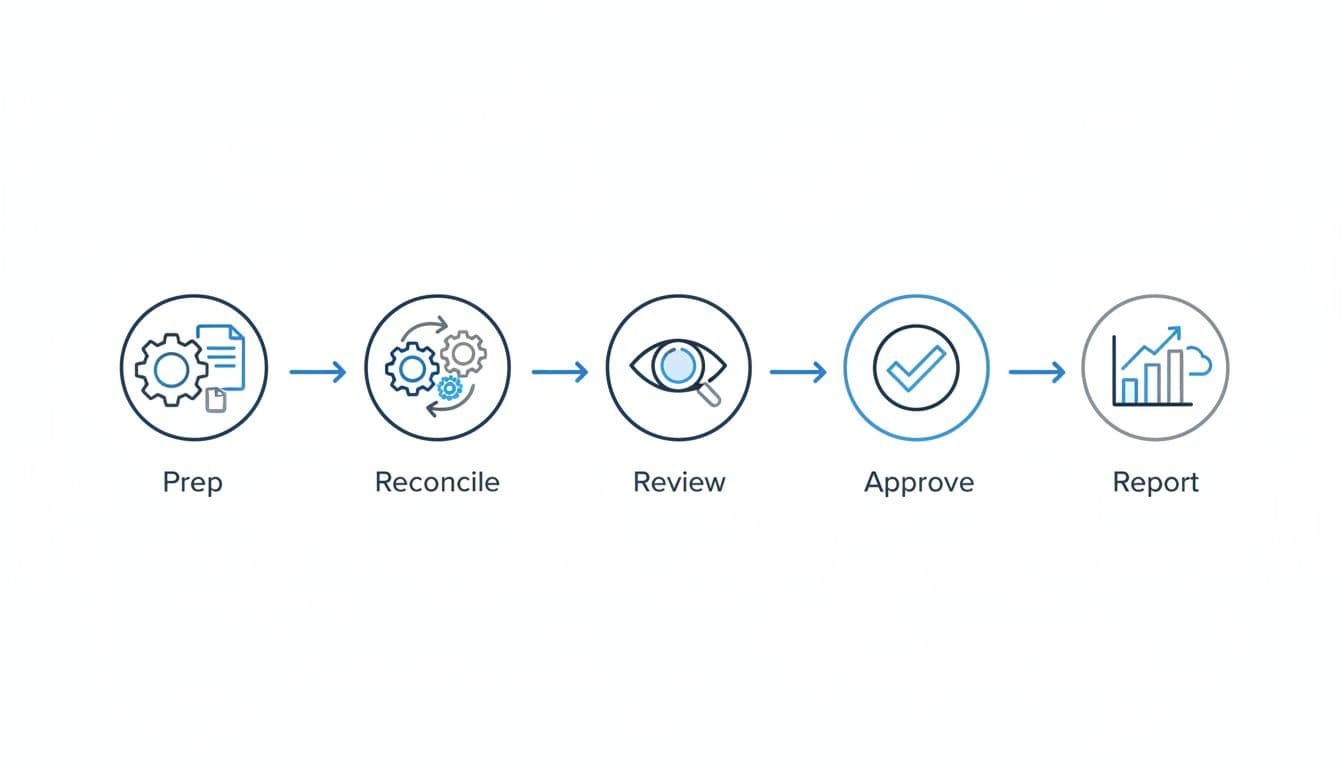
As of 2026, all three vendors are broadly associated with support for common ERPs such as NetSuite, QuickBooks Online, and SAP. That headline isn’t enough. You need to know how the connection works in your environment.
Before any demo, document these items in one page:
- Your ERP, entity structure, close calendar, and whether you use multi-book or custom segments.
- The top ten accounts that cause delays, broken out by source system.
- Every subledger or feeder system that creates monthly reconciliations or journal support.
- Which tasks require preparer and reviewer sign-off, and which are still done by email.
- What audit support, SOX evidence, or policy documentation must survive the close.
Then push vendors past the polished script. Ask them to show a deferred revenue review, a cash rec, an intercompany tie-out, and a flux explanation using your actual account types.
A generic AP demo proves almost nothing if your close pain lives in revenue, payroll accruals, and cash.
This is also where adjacent evaluations matter. If you’re still sorting out ERP selection, or comparing dedicated account reconciliation software, lock that down before assuming a close tool can solve the downstream gaps.
Pricing, implementation, and where automation claims get slippery
Public pricing is still thin in 2026. FloQast, Numeric, and BlackLine all lean on custom quotes, and scope usually depends on users, entities, modules, ERP complexity, and services.
Based on buyer reports and review-site ranges, FloQast often lands in the middle for SaaS teams, with entry points that may work for smaller groups but rise with added modules and implementation. Numeric appears to use custom pricing as well, and outside sources often position it as a lower-entry or more startup-friendly option, though actual quotes can change fast with reconciliation scope and user counts. BlackLine usually prices higher, especially when buyers add broader modules, enterprise support, or more involved implementation.

Implementation follows the same pattern. FloQast often looks lighter because it can work with the process many teams already have. Numeric may move quickly too when the scope is focused and the ERP data is clean. BlackLine usually asks for more design work up front, which makes sense if you’re standardizing a more complex organization.
What trips buyers up is the word “automation.” Some automation is real. Task routing, status tracking, sign-offs, data pulls, cash matching, and draft variance explanations can save time. Still, none of these tools will make judgment-heavy journal entries disappear. They won’t fix bad account mapping. They also won’t replace a solid month-end close checklist.
A practical question for every vendor is, “Which steps still require a human, and why?” If the answer stays vague, the ROI model probably is too.
Also ask what the quote excludes. ERP connector fees, sandbox access, training, admin support, future module pricing, annual increases, and multi-year terms often matter more than the starting number.
What a smarter demo process looks like
Most finance teams overbuy because they evaluate software the way software is sold. They watch a guided tour, score the interface, and leave with a gut feeling.
A better process is to test three real workflows and score them the same way across vendors. Pick one reconciliation-heavy task, one review-heavy task, and one audit-support task. For a SaaS team, that might be cash, deferred revenue, and month-end flux review.
Ask each vendor to show:
- How a preparer completes the work.
- How a reviewer sees exceptions and signs off.
- How support rolls forward next month.
- How an auditor or controller pulls evidence later.
- What breaks when source data arrives late.
That process exposes the difference between close management and close execution. Some tools are better at routing work. Others help do more of the work inside the system. A useful outside perspective from AppCritica’s Numeric review is that automation can be strongest in matching and anomaly detection, but every team still needs review logic and period control.
Reference calls matter too. Ask for a customer with your ERP, your entity count, and a similar accounting team size. A five-person SaaS accounting team should not rely on a Fortune 500 reference, and a global controller shouldn’t rely on a startup story.
If you’re comparing this purchase with broader financial close automation projects, keep the scoring tight. The goal is not to crown the most impressive product. The goal is to cut the most painful manual work without adding new fragility.
Best fit by company stage, team size, and control needs
For early-stage SaaS teams, Numeric often looks appealing if the close is still lean but the finance lead wants more than checklists. If the team is small, the ERP is clean, and cash or flux work is the main pain point, Numeric may offer more visible automation sooner. Still, if the close is simple, even that may be more platform than the team needs.
For scaling mid-market companies, FloQast often feels like the practical choice. It works well when the core problem is consistency, ownership, and review speed. If your team already has decent working papers and wants structure without re-platforming the entire process, FloQast usually fits that brief. Independent comparisons such as Coefficient’s 2026 look at BlackLine vs FloQast reach a similar conclusion for many mid-market buyers.
For large or public SaaS organizations, BlackLine tends to make more sense once entity count, compliance, intercompany volume, and formal control design outweigh speed of rollout. That doesn’t make it “better” in the abstract. It means the company has a different problem set.
The same logic applies to team shape. A lean accounting team often values speed, ease of use, and low admin overhead. A more complex environment values consistency, policy enforcement, and durability under audit. If speed is the top goal, FloQast or Numeric usually gets the first look. If controls depth is non-negotiable, BlackLine often moves up the list.
Conclusion
The best close platform is the one that matches where your close breaks today. If the pain is process discipline, FloQast often fits. If the pain is manual reconciliation and flux work, Numeric may be stronger. If the pain is scale, controls, and multi-entity complexity, BlackLine usually has the edge.
What matters most is fit, not feature volume. Run every demo against your real close, your real accounts, and your real handoffs. That’s how you choose close management software that helps the team close faster without creating a new layer of work.
